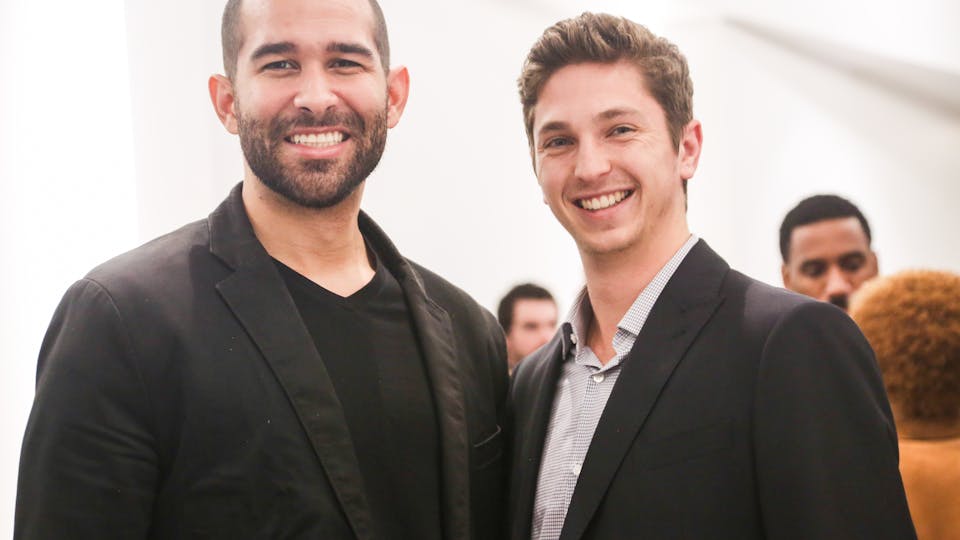
Artist To Artist: Terence Nance and Ramin Bahrani
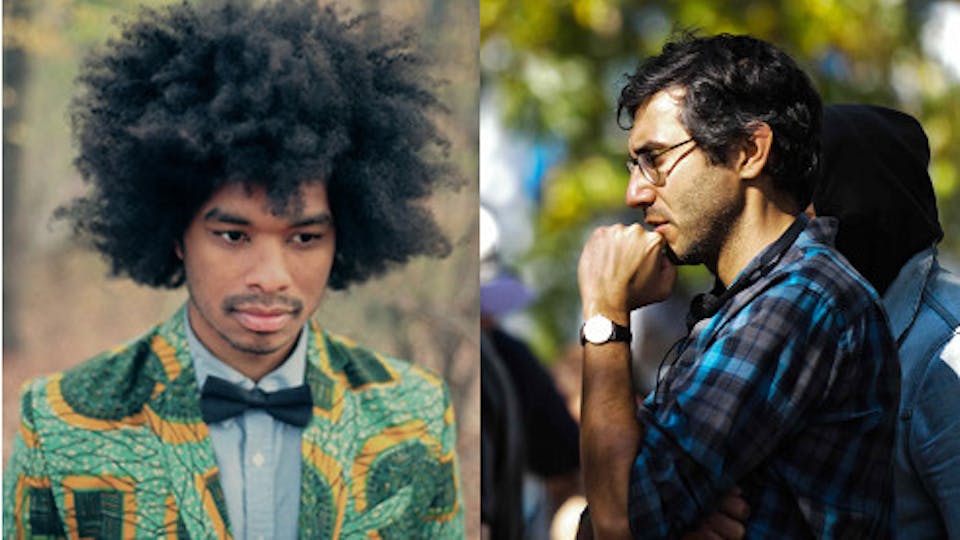
When we connected with Ramin Bahrani and Terence Nance the two filmmakers were extremely busy. Bahrani was doing press for his latest film, At Any Price (currently screening at the Tribeca Film Festival and opening in theaters April 26), a kind of departure from his NYC-centric immigrant tales as he focuses on America's heartland and a farmer (Dennis Quaid) attempting to pass his trade down to his rebellious son (Zac Efron). While Nance has been diligently trying to get his debut feature, An Oversimplification Of Her Beauty, into theaters since gaining attention on the festival circuit for his beautifully crafted mixture of non-linear storytelling, animation and improvisation in his look at a past love. (Good news: the film opens in New York on April 26)
But the two took time out for a chat, specifically on their time as TAA grantees—Bahrani was in last year's crop with his Untitled documentary project while Nance was chosen this year for his next project, The Lobbyists—but the conversation also shifted to their interest in challenging themselves (and audiences) with different projects from the ones they're known for as well as Bahrani's advice to Nance on how to get the most our of the Industry Meetings he'll be taking during the fest (take notes filmmakers).
Ramin Bahrani: Terence, I really enjoyed your film and wanted to congratulate you on it.
Terence Nance: Thank you. Thank you.
Bahrani: I wanted to know if you were an Orson Wells fan?
Terence: [Laughs] I have seen Citizen Kane and I loved it. Don’t know if that qualifies me because I’m not familiar with all of his work, but I think that was a big inspiration for me. I loved that film.
Bahrani: You need to see F for Fake you might like it.
Nance: Okay. I’ll have to check it out.
Bahrani: I really enjoyed the play on truth and fiction in your film. I didn’t know what parts of it were real and I liked that.
Nance: I’m glad. Yeah, I wanted to enter a space where when you remember something, at least for me, I don’t know what part of it happened or not. So I wanted to comment on loving situations, that were charged emotionally and knowing how you felt but not knowing really what happened. If you made “what happened” up based on an emotion you had. I think that inability to remember facts was very accurate with my relationship with Namik.
Bahrani: Was there really a short film?
Nance: There really was a short film. I really showed it to her. And that’s really how she reacted. But the specific events, I’m only remembering them to the best of my ability.
TFI: Ramin, would you ever have an interest in making a film similar to Oversimplification, in terms of its unique storytelling?
Bahrani: I’ve never done it before. Maybe the reason I’m attracted to the film is, I have no idea how to make it and probably couldn’t make it. I’m often attracted by films that are outside of what I know how to do or what my imagination naturally leads. I think there was a lot of risk in Terence’s film and that’s why I appreciated that.
Nance: But with your first two films, Chop Shop specifically, I felt it was playing with the question, “Does this kid really live like this in real life?” In the way that neorealism plays with the pieces of the identity of the actor of actress and I guess the fairness argument around it. Are we using this kid’s life? I like toeing that line and I like what you did with that movie.
So I’m taking the industry meetings with my new project The Lobbyists. It’s so different from Oversimplification where it wasn’t a process. I wrote it one night, called my friend and we shot it and that was it. And the six years of animating was out of pocket money. So this more traditional way of development and finding production partners, it’s a very different approach. I don’t know what to expect with the industry meetings because the film I want to make is very different from what I’ve made in the past.
Bahrani: What’s it about?
Nance: It’s a kind of surreal political fable about a con man and an ex-CIA agent who start breaking into houses of Republican politicians and blackmailing them into voting for progressive legislation.
Bahrani: Oh, wow!
Nance: It’s very non-linear and the whole tone of the movie kind of plays with the idea of a real, lived reality, like a political reality and the politics of the United States or is it this an alternate dimension. It’s a lot of stuff I haven’t done before but it’s something I’ve been thinking about for a long time. I haven’t really shot anything with dialogue really. [Laughs] It’s very different in all ways from what I’ve done.
Bahrani: There was a right-wing young man who was very good at doing all this stuff you’re taking about. He was conservative in his actions. He was hacking into computers and breaking into liberal offices and secretly videotaping liberals talking about abortions and cutting them up and putting them on the Internet.
Nance: Oh, I remember. But I forget his name.
Bahrani: It makes me think about your film.
Nance: [Laughs] It’s completely related to that. Mine is like that mixed with Funny Games.
Bahrani: I was really interested in that guy and I thought it was going to be a big thing and then it kind of died off.
Nance: Yeah, he dressed as a pimp and went to the ACORN office.
Bahrani: Exactly! You should get him to act in your film.
Nance: [Laughs] He’s definitely got exhibitionism in his blood. But with the meetings we’re at square one. I’m excited for the pitch meetings. Do you feel they were fruitful for you and your movie?
Bahrani: In terms of the pitch meetings, it’s good because it helps you focus on what you want to say and how you want to say it. Also to some degree it’s subjective because people have such differing opinions. Like any criticism you have to take what you feel it’s useful. And also when you’re dealing with less inherently commercial projects, which I mean in a good way and that’s probably why TFI backs these kind of projects because they’re not X-Men or typical romantic comedy type of material, you want to be careful you’re not pushed into a box you don’t want to be in. What made your movie exciting was it was creative and original and you did it your own way. I think the meetings are good because the more honest you are and the more focused you become you’re going to make connections with people who are really interested in your vision and then you can continue those dialogues as you’re developing the project. You’re going to meet people who want to be involved right away and you’re going to meet people who want to stay abreast about your film and what you’re up to and get involved later.
Nance: That makes sense.
Bahrani: Like your project, the film I’m developing through TAA has some of the things I’ve done and some I haven’t. People think Chop Shop is a documentary but it’s not and I’ve never made a documentary and I find the idea of a documentary really terrifying. And I’m grateful for the support of TFI to push me to do something I’m scared to do. I pitched an idea that some people were very excited by and wanted to be part of. It’s a documentary and the more I dug into it the less convinced I became that this is what I wanted to do. But as I was doing that I discovered other things and I found something else I’m very interested to do and I’m hoping to start shooting in the next month or two. Jason [Orans], the producer, and I havebeen researching and found the subject very hard to gain access to and only for very limited periods of time. I’m grateful there’s still so many people who want to be involved in a project. Terrance, I think based on the film you made you’re going to find people who want to be involved in a project you’re involved in because they believe in what you’re doing.
Nance: Do you feel it’s valid to assume people will be familiar with my previous work?
Bahrani: No. Not necessarily. I met some people how knew all of my films. I met with some people who didn’t know any of them.
TFI: Do you think that was bad that some of them weren’t familiar with your films?
Bahrani: No. When you sit down with someone who knows your work and loves it you’re immediately at an advantage because they have a different level of interest to everything you’re saying. But there’s always going to be people who don’t know your work and if they’re engaged by you and your ideas hopefully they’re going to follow up. And you’re going to hand them a DVD or your producer is or Tribeca will after the fact. I think that’s always the case. Nance: So do you think it’s more people want to work with you or like the idea?
Bahrani: People have to like the idea and that’s part of what was good about the pitch process, it helps you hone your idea. The more you say it to strangers the more you can hone in on simplifying how you’re going to talk about it and being as clear and passionate as you can. And that’s where some of the feedback is going to help make it sharper and point out elements that aren’t really working creatively or otherwise. And I think those are the areas you have to be cautious not to let people change it too much, unless it’s good feedback.
When do you think you’re going to shoot The Lobbyists?
Nance: I’m hoping by the fall. We have a staged reading next month and then we’ll be off if fundraising goes well.
TFI: Terence, with Oversimplification being different from, is there anything you can take from making that film into making your next?
Nance: I feel like it’s whole new territory. On some level I feel the main thing I’m taking from Oversimplification is just the attitude of the by any means necessary that you have to take with any film. But in how that film was produced it’s ripe with several critical mistakes that made the production take forever. I just need to have everything in place—producers, EPs, cast, even musicians—as early as possible. So I do feel it’s a whole new ballgame.
TFI: Ramin, is there a key crew person that’s essential for you that you’d advise Terence to have?
Bahrani: It’s different with each project. Seeing his one film in my mind his cast should be very important. I don’t know your process, Terence, but it looks like there’s a lot of room for improvisation with your cast.
Nance: Yeah.
Bahrani: I would think that actors would be so important to you.
Nance: Yeah. I agree.
Bahrani: And there may be similarities to both projects. I don’t know your script but I’m assuming there’s some personal stories in this political world so there may be interpersonal relationships in the new project that are somehow connected to Oversimplification.
Nance: Yeah. There’s definitely strong female leads in both that drives a supporting male who is chasing after her. I think a lot of the success of The Lobbyists will lean on the charisma of the female lead and how desirable on some level and how much we can sell the relationship between those two.
I think as much as I tried to do something different it’s personal in a way that it really talks about my outlook on the political dynamic in the United States and my relationship to it. It’s sourced in me and it’s something I obsess about.
Bahrani: Hearing more of this I’d suggest in the meetings not to say it’s radically different from your previous work. I actually think there’s similarities that you’re building on and growing with and that’s important for people who liked your previous film and are eager to see you grow. The last film I did, At Any Price, is very different from my previous work but it still has a lot of roots from them. Sometimes critics and investors want to limit you by demanding you do the same thing over and over again, which is very frustrating. And part of what’s great about TFI is their support encourages you to take risks. You can about that in your pitch sessions.
TFI: Ramin, how has the reaction been to At Any Price, seeing it’s a little different from your previous films?
Bahrani: Many critics have been very receptive and were excited by the growth of the film and the direction it was taking. And some of them were a little disappointed that it wasn’t like Chop Shop. And that’s okay, it’s important not to pay too much attention to that stuff. The more films you make you realize which critics speak to you and how you can learn from their reactions – both positive and negative. There are so many filmmakers that we love who grew in their careers. I mean Luchino Visconti didn’t make La terra trema over and over again, by the end he was making The Leopard. I haven’t made The Leopard by any stretch of the imagination, I have a long way to go, but I like to push creatively and try new things. You don’t want to keep doing the same thing over and over again. What I think is great about what Terence is talking about is that it sounds like a real growth from the film I saw, and that’s good.
Nance: I appreciate that.
Bahrani: And with TFI what’s great is it’s an environment and a group of people that encourages you to take those risks. Because often times the industry and the things surrounding it try to eliminate imagination and keep things safe. As artists we want to risk and try and fail and learn and try again.
Nance: Yeah, my interest in TAA was that a few of my friends did it and they spoke highly about the year-round support. And they had very different projects, one was a narrative and one was a doc. I felt the nature of this whole thing to me is about momentum and I guess more specifically guarding momentum, you know how are you going to start? And TFI gives you some money to kick you off, set you up with the right people to give you a push in the right direction in terms of production support, funding, development and then an attempt to guard that momentum. I think making a movie alone without any support I think that was hard thing. I think that’s why it took so long for me to make Oversimplification being the only force to guard that momentum is just not sustainable. So I think that’s what attracted me was this idea of a team of people and an organization invested in guarding that momentum in a realistic lifespan of the production of a project.
TFI: Thanks for the time guys. And by the way, that activist you were talking about is named James O’Keefe.
Bahrani: That’s it! Terence, for some time I really considered developing a project around that kid. Get him to be in your film.
Nance: [Laughs] I’m gonna holla at him.
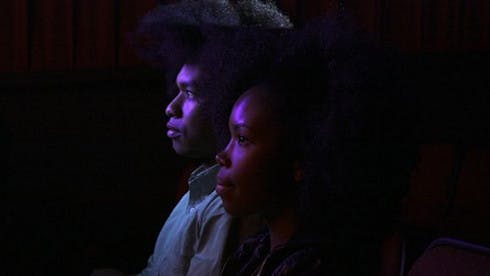
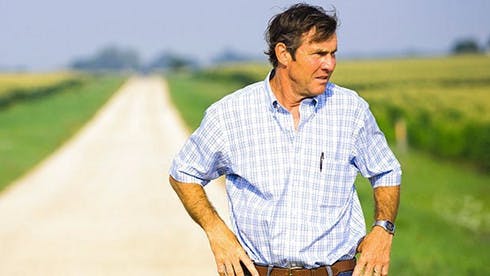
[Photos: (top-bottom) Terence Nance (left) and Ramin Bahrani; An Oversimplification Of Her Beauty; At Any Price]