Jyllian Gunther and Essie Chambers Chat 'The New Public'

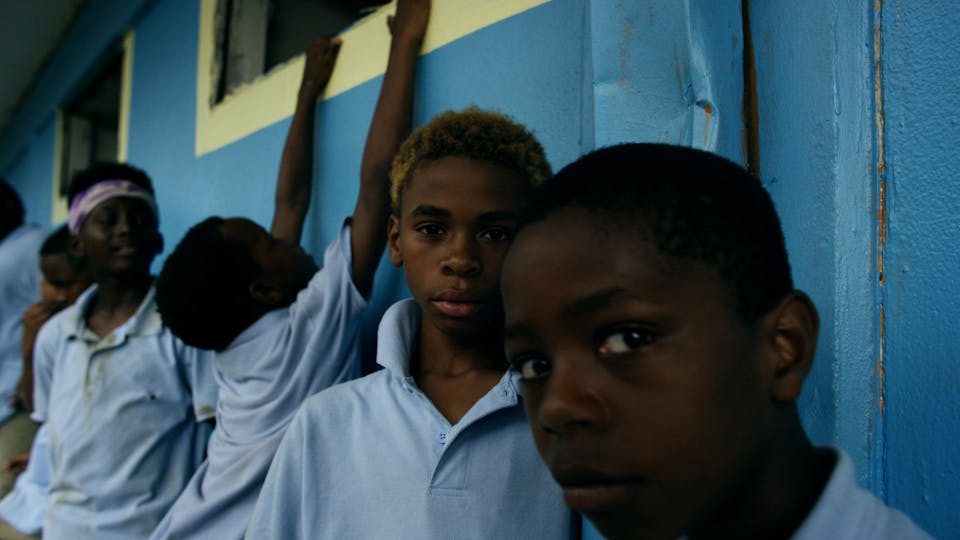
The New PublicThe New Public I began filming The New Public in 2006. Four years and 700 hours of footage later, it was time to make sense of what I had experienced and documented. The edit took 15 months, and the film emerged out of long intense conversations, debates (sometimes full-on arguments and even occasional tears) between myself, editor Penelope Falk, and producer Essie Chambers. I thought it would be appropriate to approach writing about the film here in a similar way, in the form of a conversation between Essie and myself.—Jyllian Gunther The New Public chronicles the ambitious efforts of a group of passionate, young educators as they create a small public high school from scratch in Bedford-Stuyvesant, Brooklyn. Their idealistic vision is tested when they are confronted with some of the harsh realities faced by the community. Told from the perspective of the educators, the students, and the parents, the film follows their emotional journey from opening day to first graduation. With unprecedented access to its subjects (a teen with a secret, a teacher in crisis, and a mother driven to see her son succeed), the film combines verité footage with material shot by the students. It’s an intimate account that allows the viewer to decide what it means to bridge the urban achievement gap, who is responsible, and what is possible.
??Essie Chambers: First, a bit of our history, which is relevant to the film. Jyllian and I met at Nickelodeon close to 15 years ago on a project called, Short Films By Short People. The series partnered kids with writers/producers/filmmakers and helped them make their own films, which aired on the network. Jyllian was the writer and I was the executive on the project.??
Jyllian Gunther: I hadn’t even remembered the particulars of that project until now, which is funny because in The New Public, we gave kids cameras to tell their own stories and incorporated some of their work into the film. So we met doing kids TV, and we both love kids and kid stories.? Chambers: Which brings me to my first question: This community is coming together to form a school. There were 8 staff members, and 104 kids and their parents. How did you decide who to follow?
??Gunther: I knew two of the founders for over 20 years, and they were psyched to have this film be an integral part of the birth of their school. A big part of the idea for their school, named, Brooklyn Community Arts and Media (BCAM), was to draw kids in through arts and media and to make them critics and creators not just consumers—
??Chambers: Are you reading from their brochure???
Gunther: Ha, no, but that had something to do with their decision to give me all that access, because making the film was one very real way to do that. The film would be, in a sense, a community effort, and that was also in keeping with the school’s philosophy.? Chambers: So you had amazing access from the get go. I remember the summer before the school opened you telling me that you had just come back from a day of filming the school’s principal and social worker, literally going door to door to homes of enrolled students they had not heard from to make sure they were going to show up on the first day of school. Gunther: Yes, they let me be witness to, and film, everything. I met John (a student, and one of the film’s main subjects) at a school orientation the summer before school opened and we connected instantly. He was so nervous about high school, he was calling the principal every day and writing him poetry…and he shared it all with me. I met Earlene and Moses, (also main subjects - a mother and her son) on the first day of school as she was literally escorting him into his first class. They had an unusually close relationship, and they were both charismatic and receptive, so that was a no brainer. I didn’t meet Lateefah (also a student and main subject) until about a month in. She blew me away with her candor. She’d had a lot of trouble in her middle school, but she was super smart, and ambitious about her future. She made it known right away that she was determined to change. And that was her challenge—could she make it, and could the school help her? The stakes were really high for her— And not just for her, for everyone. For that reason, the story is very bittersweet. Some kids soar and others fall through the cracks. Gunther: Yes. And the story highlights how nuanced and complicated the role that school plays in the successes and failures of its students. It brings up the debate about whether the issues schools are charged to fix are bigger than they can handle. Chambers: I know that in the editing process we were conscious of not making James, the principal, a main subject, because we did not want to tell that kind of story, i.e. hero saves the day. Gunther: I knew from the start I did not the film to be centered on the principal, but I followed him often because there was a lot of action around him and a lot of decisions were made that involved him. So he brought me to people. He was a connector. Chambers: So what about Kevin (main subject, English teacher). We spent so much time in edit trying to find the right balance of focus on him in the film without it being too much his story, what were you thinking when you followed him? Gunther: I absolutely thought there was no chance he would be a main subject. For one, he was a very close friend, and he was another white guy, and that story has been told. But I started honing in on Kevin about a month into school because he really started to struggle pretty quickly. Chambers: The idea that he came in as the most experienced teacher and ended up having the hardest time is a poignant story that is common and not often told. So, let’s talk about another teacher who is more of an anomaly Lavie Raven, (main subject, English teacher). Gunther: From the kids’ perspective, he had an extremely innovative way of relating to them in his teaching. Which is something Kevin could do as a person, but as a teacher in this particular community it was a learning curve. Lavie also had a social agenda he was working from so everything he said to me or the students was filtered through this agenda, and it was compelling and controversial. And as a teacher of color, he added an important perspective to the film. Gunther: Which I imagine is part of the reason you wanted to work on the film. And part of why you said yes when I asked you to come in and help turn our 700 hours into an hour and a half of gold.??
Chambers: Absolutely! And the kind of access you had to these kids over such a long period of time, made for an opportunity to contribute something really fresh to the conversation about education reform—an artful, nuanced, character driven story versus an advocacy or policy piece. I’m also fascinated by the small schools movement.??
Let’s just say a little something about what that is: The essential concept is to shut down large, dysfunctional inner-city public high schools and reopen them as collections of small ones, with three or four small schools often sharing the same building.
??Chambers: And these schools are specially designed to keep students from falling through the cracks and allow them to receive more individual attention from their teachers. In the last 10 years over 300 schools were opened in New York City, which is the vanguard of this movement.
Are you reading from the brochure???
Chambers: Ha. But really, I was pretty surprised to learn that individual educators with a vision are being supported to create their own schools.??
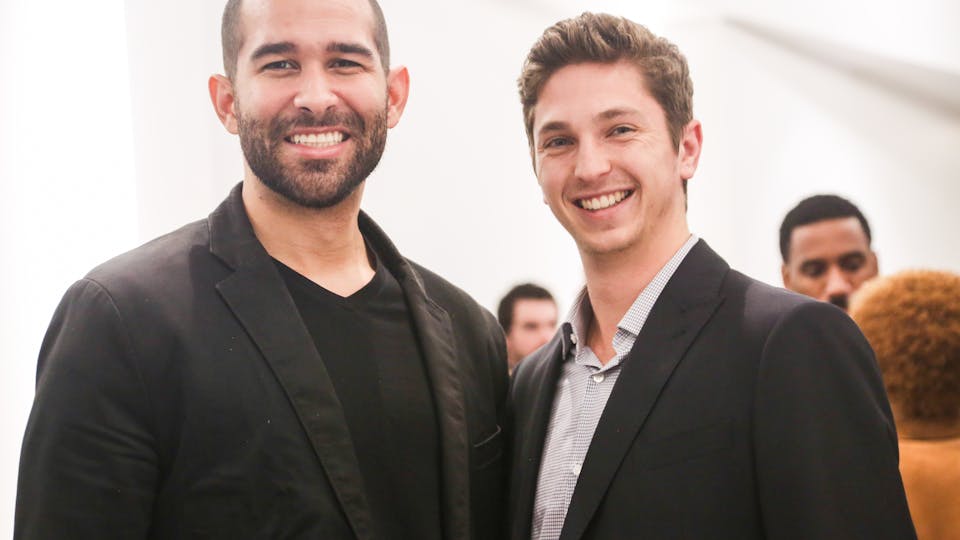
Gunther: Yes, I had no idea this was possible. And the fact that I was privy to this felt like an opportunity to tell a very specific and unique story of education reform from the inside and without an agenda. You said this is a “show” film, not a “tell” film, and I liked that. It allows you to draw your own conclusions. ? And on that note, any concluding words? Gunther: Throughout the four years I was filming, everyone in the school community kept re-assuring each other to stick with it even though it felt impossible. Their perseverance was inspiring and motivating. In editing the film, we also had moments of despair. How could we do justice to everyone’s story? And in the end, nothing was more satisfactory than sharing the film with the subjects and them saying to us, “That is me, that’s my story, and that’s how it was.” [Photo: (Left-Right) Essie Chambers and Jyllian Gunther]