
Sonali Gutali, Nina Menkes Receive Creative Capital Grants
Creative Capital has announced its 2012 grantees, who'll receive up to $50,000 in direct project funding, plus advisory services valued at more than $40,000. Among them are 2006 Tribeca All Access alum Sonali Gulati, 2012 TFI Documentary Fund recipients (for Our Nixon) Penny Lane and Brian Frye, and Reframe partners Nina Menkes and Ken Jacobs. Their projects:
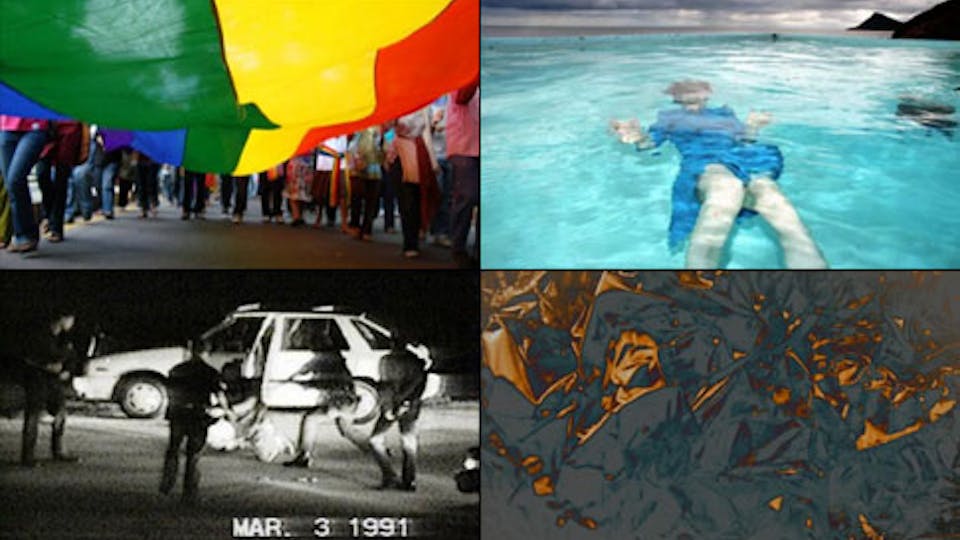
Sonali Gulati's Indian Patient is a nontraditional documentary that uncovers the growing underground medical industry of “curing” homosexuality in India. The film creates a dialogue between factions with differing points of view by exploring the story of one individual in-depth: the gay patient, his family, gay and lesbian activists, and reactions by medical professionals. The process of making the film will address the subjects of authorship, spectatorship and representation.
Set in Los Angeles and Cairo during the searing heat of a contemporary summer, Nina Menkes' Heatstroke is an existential murder mystery about two sisters: an American movie star and a diplomat’s wife stationed in Egypt. The two women are deeply estranged not only from themselves, but also from each other, and the film’s central drama is Nikki’s attempt to reconnect with her sister. The film’s core is a violent, possibly sexual, early trauma that sits in these women’s psychic closet and this event’s rippling, mirroring effects against two very different cultural landscapes.
Brian Frye and Penny Lane's The Rules of Evidence is a feature-length documentary that investigates how courts interpret motion pictures presented as evidence. It explores the history of evidentiary films and shows that courts have developed a unique set of rules to determine when and how particular films can be admitted as evidence—a “forensic film theory.” The result can be surprising. For example, many people saw the Rodney King video as indisputable proof of police brutality. It showed four police officers mercilessly beating an unarmed and incapacitated man. But the court allowed the lawyers defending the police officers to present an alternative explanation. The video established certain facts, but those facts permitted more than one conclusion. By explaining how courts evaluate films, The Rules of Evidence yields important insights into the theory of documentary cinema and the representation of reality.
In Kenneth Jacob’s work Cyclone, digital still photographs—featuring extreme close-ups of flowers and fruits, for example—are made from a succession of close camera positions. Each series of exposures is repeated several times on the computer comprising a movie of sorts. In the resultant film, close observation of movement is visible without 3-D viewing aids, using a standard monitor or projection presentation. In Cyclone, the rhythmic shutter interruptions are softened and the depth illusion enhanced by replacement of the black intervals (flicker) with repeats of the same sequence of photographs in their complimentary colors.
Learn more about the grant process at Creative-Capital.org.